How to Create a Booking Website for Free (And What It Actually Takes in 2026)
Search interest around how to create a booking website for free has grown rapidly. AI website builders, no-code platforms, and API integrations make it feel possible to launch a booking flow in a weekend.
And technically, you can.
But creating a booking website is not the same as building booking infrastructure.
A time-slot picker connected to Stripe is not a booking engine. A calendar with a form is not operational capacity management. An AI-generated interface is not concurrency-safe inventory logic.
If you are going to build one yourself, here is what it actually requires in 2026.

Can You Build a Booking Website for Free in 2026?
Yes.
You can use:
- AI website builders
- No-code platforms
- Calendar tools
- Payment APIs
- AI agents to generate code
- Basic database integrations
You can connect a form to a payment processor and send confirmation emails.
From the outside, it may look like a booking system.
But a booking website does not equal booking infrastructure.
A scheduler allows time selection.
A booking engine manages inventory, payments, compliance, reporting, and distribution under real-world pressure.
The difference matters most when money and capacity are involved.
What a Real Booking System Actually Includes
Before deciding to build your own tour booking system, understand the architectural layers behind a true booking engine.
1. Front-End Interface Layer
This is the visible portion:
- Tour pages
- Date pickers
- Time-slot selection
- Guest information forms
- Add-ons and upsells
AI can generate this layer quickly. It is the simplest component.
The complexity begins behind the interface.
2. Inventory and Capacity Logic Layer
This is where most DIY builds fail.
A real booking engine must manage:
- Real-time seat tracking
- Capacity limits per departure
- Resource allocation
- Concurrency protection
- Temporary seat locking
- Multi-product inventory overlap
If two users attempt to book the last available seat at the same time, what happens?
Without concurrency controls and seat-locking logic, double bookings occur.
Inventory logic is not visual. It is mathematical and transactional.
3. Payment Processing Layer
Collecting payment is not just embedding a checkout form.
A booking engine must handle:
- PCI compliance
- Secure tokenization
- Refund logic
- Partial refunds
- Chargebacks
- Currency normalization
- Tax calculation
Payment disputes and refund edge cases require structured workflows, not manual fixes.
4. Waiver and Legal Layer
For tour operators, waivers are operationally critical.
A booking infrastructure must support:
- Digital signature capture
- Secure storage
- Guest-level association
- Time-stamped documentation
- Retrieval during disputes
Legal documentation cannot rely on loose file uploads or unsecured databases.
5. Notification and Automation Layer
Customers expect:
- Immediate confirmation emails
- SMS reminders
- Calendar invites
- Pre-trip instructions
- Follow-up review requests
Automation must integrate with booking logic.
If a booking is modified, cancelled, or partially refunded, all communications must update accordingly.
6. Reporting and Revenue Layer
Operators need visibility into:
- Daily sales
- Channel attribution
- Tax reporting
- Departure utilization
- Staff capacity
- Revenue per product
Without structured reporting architecture, business intelligence suffers.
7. Distribution and Channel Layer
If you distribute through OTAs or partner channels, inventory must sync.
This includes:
- Real-time availability updates
- Channel reconciliation
- API communication
- Commission tracking
- A scheduler does not handle this.
A booking engine does.
This is the structural difference between a simple free booking system for tour operators and a full operational backbone.
If you are unsure which layer presents the greatest risk in your current setup, a booking infrastructure consultation can clarify exposure points.
If You Use AI Agents to Build It, Here Is What You Would Need
AI agents can:
- Generate UI code
- Connect APIs
- Draft backend logic
- Suggest database schemas
But they cannot automatically design your business logic correctly.
You must configure:
- Capacity logic
- Concurrency management
- Time zone normalization
- Daylight savings adjustments
- Payment reconciliation
- Error logging
- API failure handling
Ask yourself:
- What happens if two users book the last seat simultaneously?
- Eventually, you’ll reach a point where
your
tour grows faster than expected. How do you prevent overbooking during peak traffic?
- How do refunds cascade through reporting?
- How do you normalize time zones across international guests?
- What happens if your payment API times out mid-transaction?
AI can write code. It cannot define operational responsibility.
The Hidden Complexity Most DIY Builders Miss
Scalability Under Load
Traffic spikes during promotions or peak season can overwhelm lightweight builds.
Without queueing systems and stress testing, failure occurs at the worst time.
Edge Cases
Daylight savings shifts, cross-time-zone bookings, and partial guest modifications introduce complexity most MVP builds ignore.
API Failures
External systems fail. Payment gateways time out. Email providers throttle sending.
Do you have retry logic and error monitoring?
Email Deliverability
Confirmation emails landing in spam create operational chaos.
Deliverability requires domain authentication, warm-up strategies, and monitoring.
Payment Disputes
Chargebacks require documentation retrieval, waiver access, and structured evidence workflows.
Data Security and PCI
Storing card data incorrectly exposes legal and financial risk.
These are not fear-based arguments. They are engineering realities.
When Building a Free Booking Website Makes Sense
There are valid scenarios:
- Testing an MVP concept
- Low-volume coaching or consulting
- Internal scheduling
- Very small operations without inventory overlap
If capacity complexity is minimal, risk exposure decreases.
When It Becomes Risky
For:
- Tour operators
- Activity providers
- Multi-product businesses
- Seasonal high-volume traffic
- Businesses dependent on precise capacity control
- Operators distributing inventory across channels
Revenue depends on reliability.
Operational friction damages reputation quickly.
Why Dedicated Booking Systems Exist
Booking infrastructure exists because operational logic becomes complex fast.
A scheduler is a calendar wrapper.
A booking engine is an operational backbone.
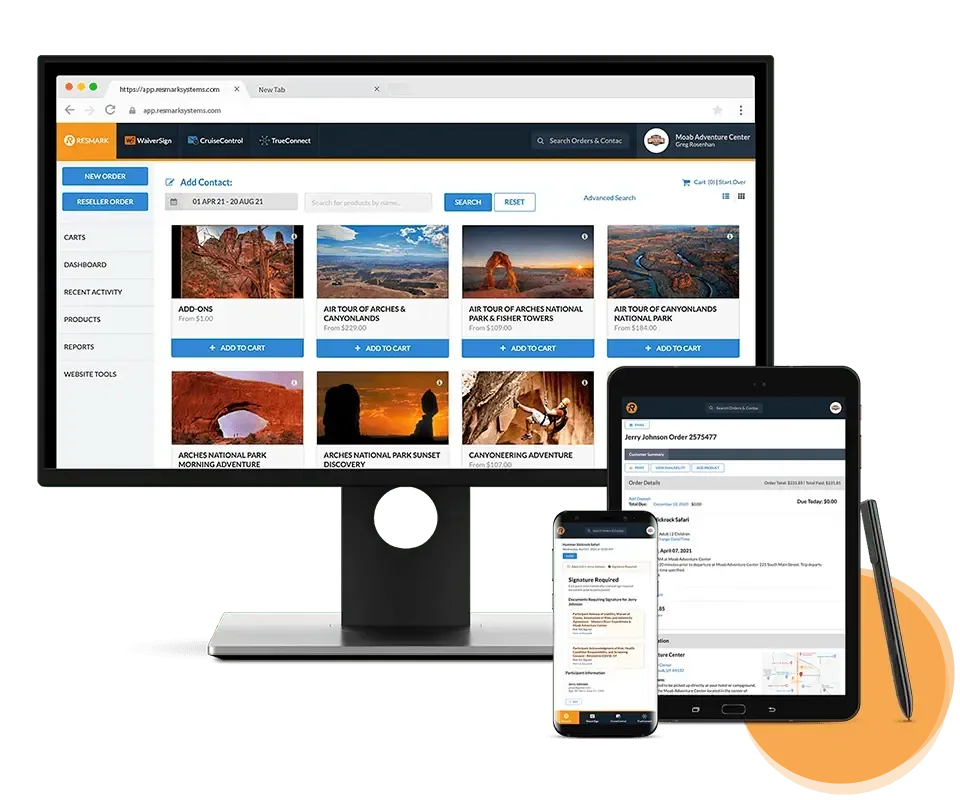
Platforms like Resmark Systems were built to manage inventory concurrency, payment workflows, waiver compliance, reporting architecture, and distribution synchronization at scale.
Dedicated systems evolve to handle real-world load, edge cases, and integration demands that DIY builds underestimate.
This is not about discouraging innovation. It is about recognizing engineering scope.
The Strategic Balance
Use AI for:
- Landing page testing
- Marketing experiments
- Content generation
- Funnel optimization
- MVP validation
Use booking infrastructure for:
- Revenue protection
- Capacity control
- Operational reliability
- Legal compliance
- Scalability
Innovation is powerful. Infrastructure protects revenue.
Both have roles.
If You Still Want to Build One, Here Is a Checklist
If you are committed to building your own booking website for free, ensure you:
- Define inventory logic clearly.
- Map concurrency scenarios in detail.
- Implement temporary seat locking.
- Stress test capacity under load.
- Test refund and partial refund flows.
- Simulate API failures.
- Implement structured logging and monitoring.
- Normalize time zones across geographies.
- Encrypt sensitive data properly.
- Plan migration pathways if scale increases.
This checklist does not eliminate complexity. It exposes it.
Infrastructure vs Innovation: Choosing Wisely
- Creating a booking website for free is possible.
- Creating booking infrastructure is engineering.
- Innovation without operational resilience creates fragile systems.
- Infrastructure without flexibility creates stagnation.
- The right decision depends on volume, risk tolerance, technical capability, and growth goals.
- If your business depends on capacity precision, payment reliability, and scalable performance, infrastructure becomes strategic.
- If you want a neutral evaluation of your architecture before committing to a build or migration, a scalability assessment can provide clarity.
Frequently Asked Questions
Can I build a booking website for free?
Yes. AI website builders and no-code tools allow you to create basic booking flows at little or no cost. However, full booking infrastructure requires deeper engineering.
What is the difference between a booking website and a booking engine?
A booking website is the front-end interface. A booking engine includes inventory management, concurrency control, payments, compliance, reporting, and distribution.
Can AI agents build a booking system?
AI agents can generate code and connect APIs, but you must define capacity logic, concurrency rules, and operational workflows yourself.
How do booking systems prevent double bookings?
They use concurrency control, transactional database logic, and temporary seat locking to ensure two users cannot purchase the same inventory simultaneously.
Are free booking systems secure?
Security depends on implementation. Without proper PCI compliance, encryption, and monitoring, risk increases significantly.
When should I switch to a dedicated booking platform?
When volume increases, inventory complexity grows, distribution expands, or operational risk becomes unacceptable.

Share This Post